How to Build a Wardrobe You Stop Thinking About
A uniform, three colors, a tailor you know by name and one rule about what comes in. The method for getting dressed without deciding anything.
Think about the last time you stood in front of an open wardrobe at seven in the morning and felt nothing but mild dread. Plenty of clothes. Nothing to wear. The problem is almost never that you own too little. It is that what you own does not agree with itself.
A wardrobe you stop thinking about is not a minimalist wardrobe, and it is not a capsule with a magic number attached. It is a small set of decisions, made once, that mean every piece goes with every other piece and every piece fits. After that, getting dressed takes exactly as long as putting on clothes.
Decide on a uniform
Most people who look consistently well dressed are wearing the same outfit in slight variations, and have been for years. A dark trouser and a soft shirt. A knee-length dress and a cardigan. Jeans, a white tee and a good jacket. They found a shape that suits their body and their days and then stopped looking.
Find yours by looking at photographs of yourself from the last two years and noticing which outfits you were happy in. Not the ones you thought you should like. The ones where you look relaxed. There will be a pattern. That pattern is your uniform, and the rest of this piece is about buying more of it and less of everything else.
Pick a base of three colors
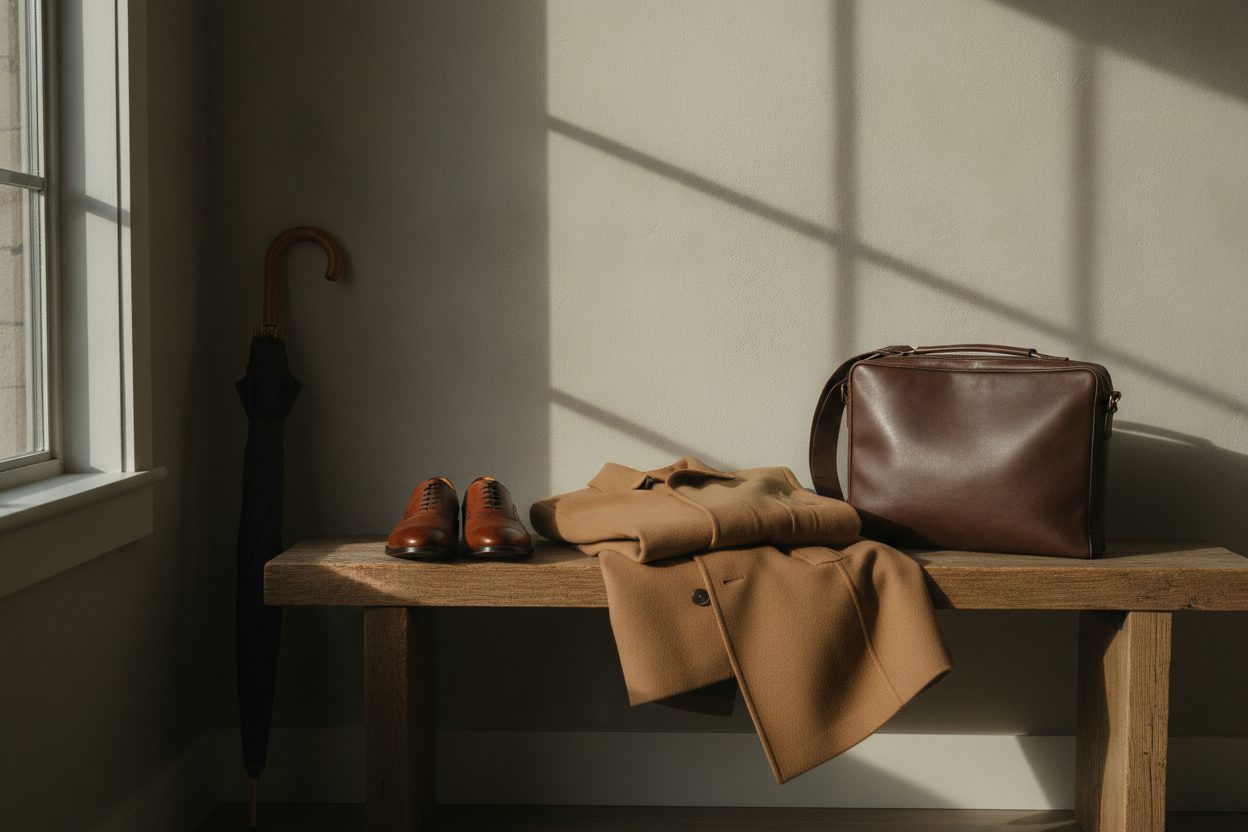
Choose one dark, one light and one in between, and make them the colors of everything structural: trousers, skirts, jackets, coats, knitwear, shoes, bags. Navy, white and camel. Charcoal, cream and olive. Black, ivory and gray. It does not matter much which three, as long as they look good together on a hanger and good against your face.
Everything in the three colors goes with everything else by definition, which is the whole point. Pattern and brighter color come in through the small, cheap, replaceable things: a scarf, a shirt, a pair of socks. If you love a bright coat, buy it, but buy it knowing it is the exception and not the system.
Fit beats fashion every time
A plain jacket that fits across the shoulders will look more expensive than a designer one that does not. Fit is where the money shows, and almost nothing off the rack fits anyone exactly. So shop for the one measurement you cannot change and plan to alter the rest.
For jackets and coats, that is the shoulder. For trousers, the seat and the rise. For shirts, the shoulder again and the chest. If those are right, a tailor can take care of the length, the waist and the sleeves. If they are wrong, nothing can save it, and you should leave it on the rack whatever the discount.
Know a tailor
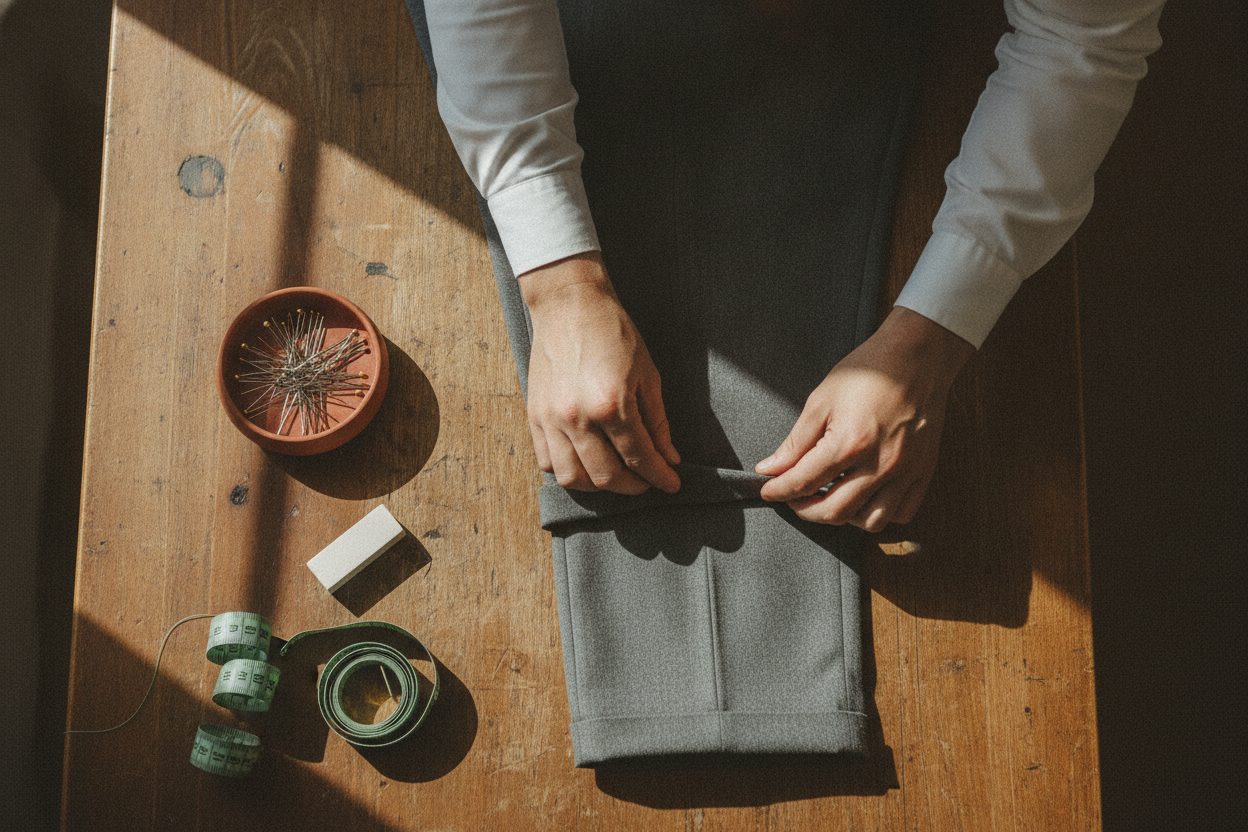
The single most valuable relationship in a good wardrobe is with the person who does your alterations. Find one near you, take them something simple like a hem, and see how it comes back. If it is good, go back with everything. Within a year they will know your measurements, your preferences and which leg is longer, and every purchase you make will be fitted to you in a week for the cost of lunch.
Most of what a tailor does is cheap. Hems, sleeve lengths, taking in a waist, moving a button. Budget ten to twenty percent on top of any purchase for alteration and it will look like it cost twice what it did.
One in, one out
The rule that keeps the system working is brutally simple. When something new comes in, something goes out. Not into a bag in the hall for six months. Out, that week, to a charity shop or a friend or textile recycling.
This does two things. It keeps the wardrobe the size you can see at a glance, which is the size you will actually wear. And it slows down buying, because every purchase now costs you something you already own. You will find yourself in a shop holding a shirt and asking which shirt it replaces. Often the answer is none, and you put it back.
What to spend on
Spend on the things that carry the outfit: shoes, a coat, the one jacket, knitwear, a bag. These are the pieces that fail visibly when they are cheap. A thin coat looks thin. Bad shoes look bad from across the street and feel worse by lunchtime. Good knitwear, washed by hand and folded, lasts a decade and gets softer.
Spend on the base colors too, because those pieces will be worn hundreds of times. A navy trouser worn twice a week for five years costs almost nothing per wear at any price.
What not to spend on
Do not spend on anything you will wear a handful of times: occasion dresses, trend pieces, the bright coat. Do not spend on white tee shirts or basic cotton shirts, which yellow and sag at any price and should be replaced every year or two. Do not spend on anything you have not tried on, and do not spend on anything because it is reduced. A thing you would not have bought at full price is not a bargain at half.
The money you save here is what pays for the tailor and the coat.
Keep it where you can see it
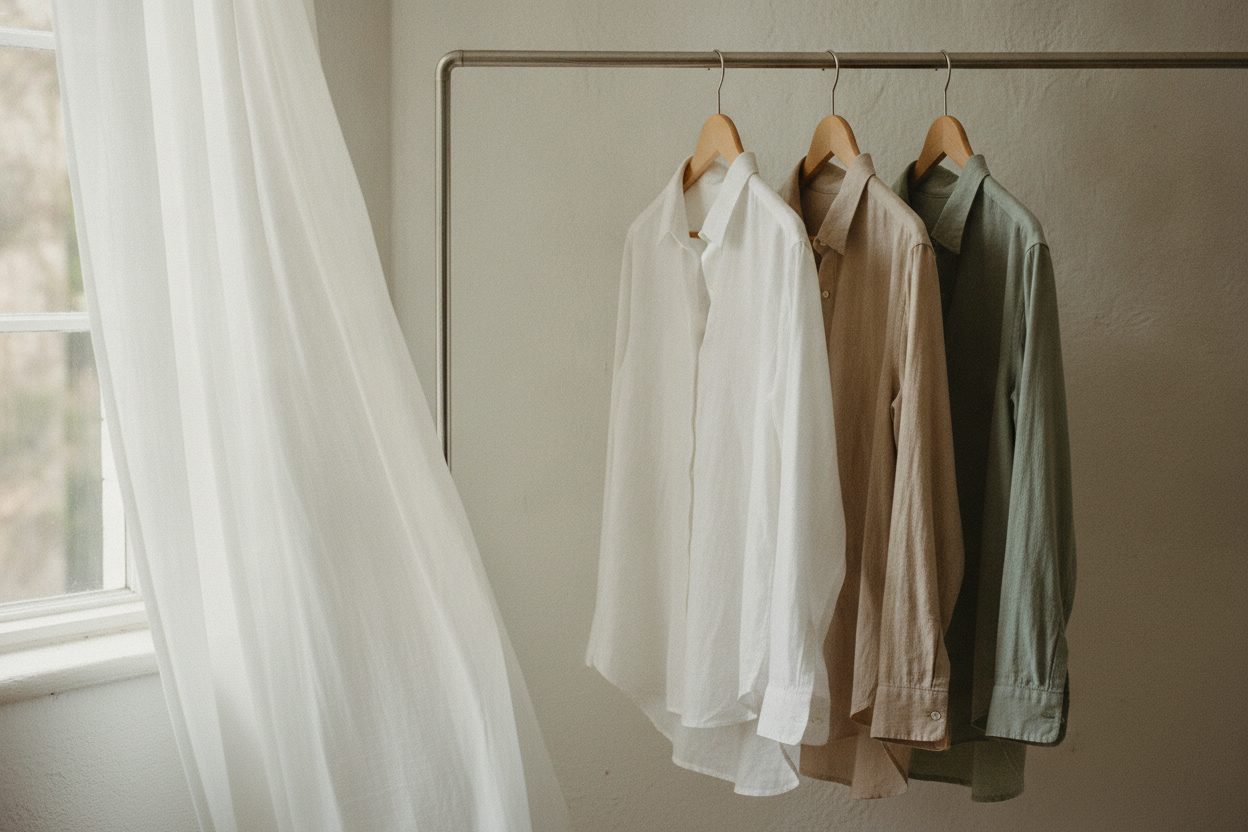
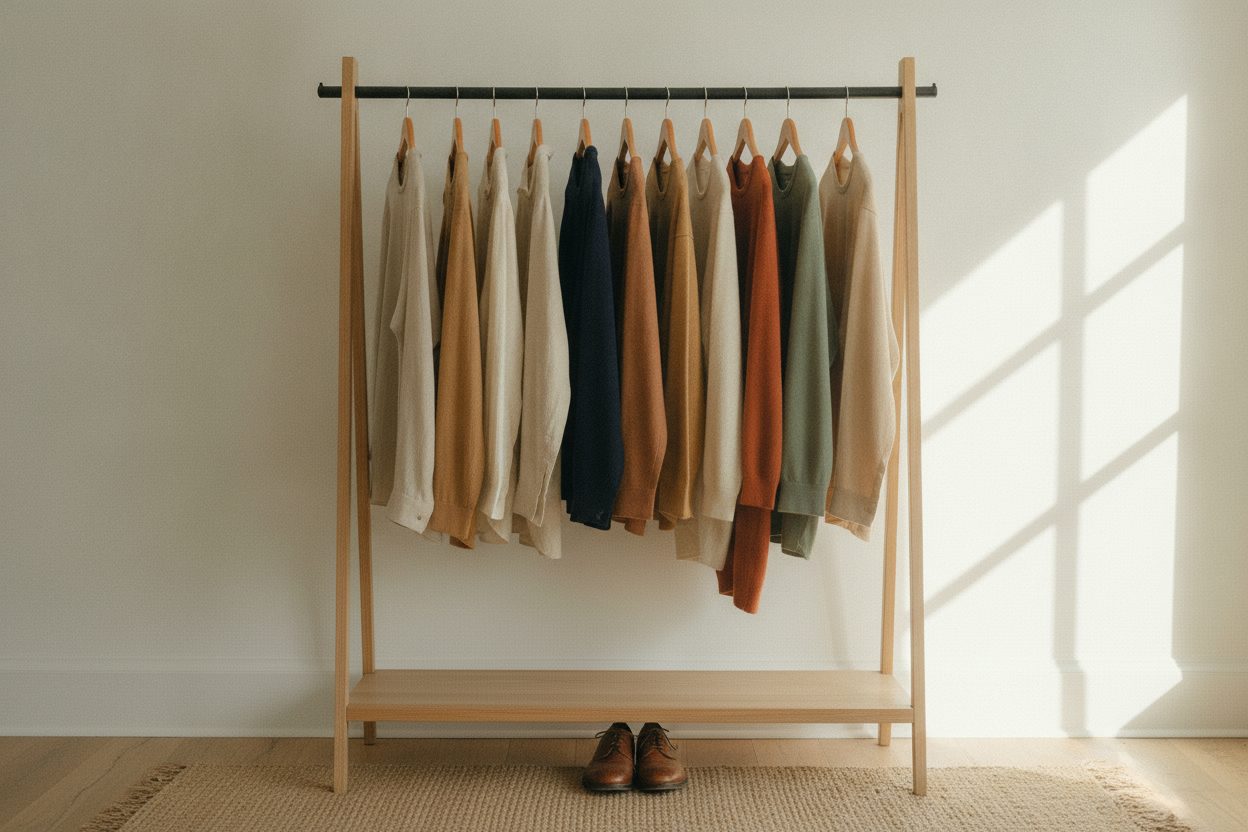
A wardrobe you stop thinking about must be visible. Matching hangers, a little space between each one, shoes in a row rather than a heap. Fold knitwear, hang everything else. Store the other season’s clothes somewhere else entirely so the rail only shows what you could wear today.
When you can see everything in three seconds, you dress in five minutes. When half of it is in a bag on top of the cupboard, you will forget you own it and buy it again.
The dull Tuesday test
The test of all this is a dull Tuesday. You open the wardrobe, take out trousers and a shirt and a knit, and they go together because they could not do anything else. The trousers are the right length because the tailor made them so. You put them on and think about your day instead of your clothes.
That is the whole ambition. Not to look fashionable, not to own less for its own sake, but to make getting dressed a thing you no longer notice. The people who manage it are not more stylish than you. They just decided once.