10 Things Worth Buying Once, Properly
The few objects where the good version pays you back for twenty years, and exactly what to look for in each before you hand over the money. No brands.
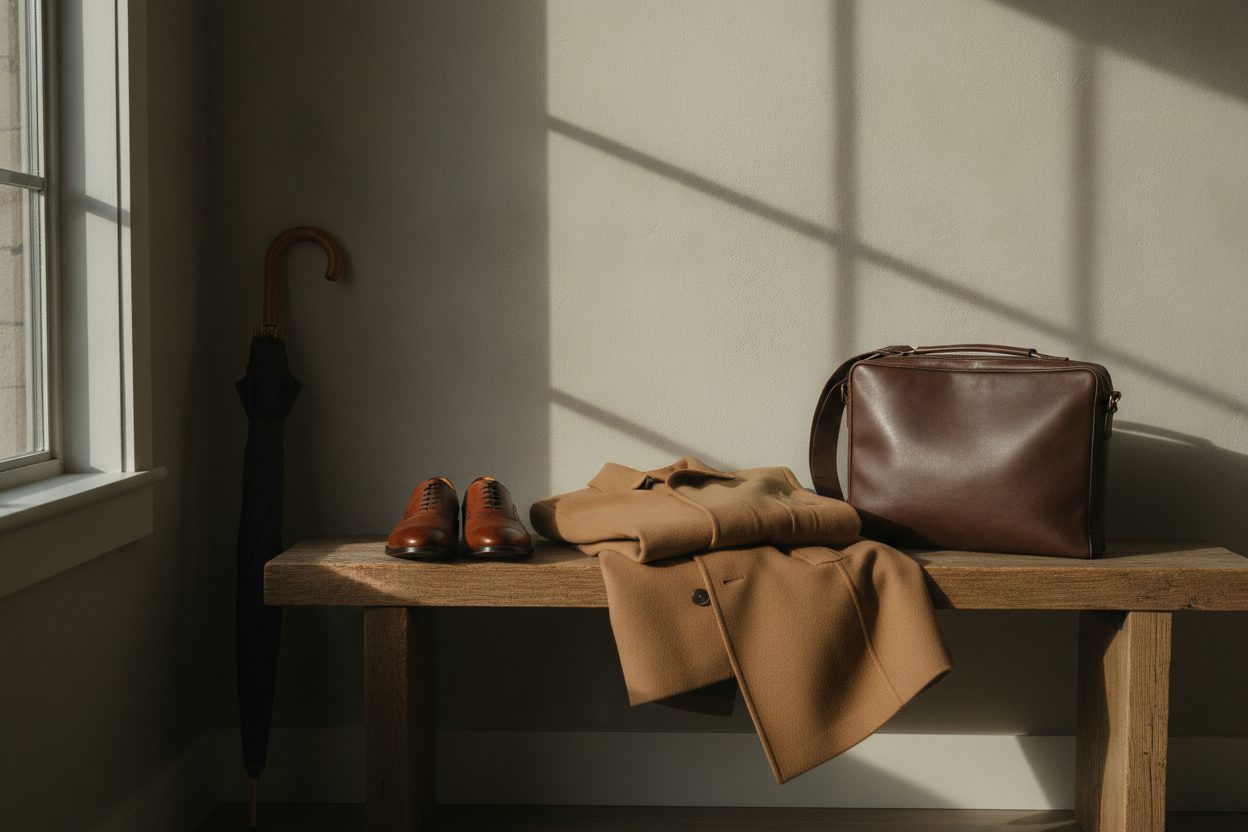
There is a kind of purchase that hurts on the day and then quietly pays you back for twenty years. It is not the expensive version of everything. It is the good version of the few things you use constantly, that fail visibly when they are cheap, and that can be mended rather than thrown away.
Here are ten of them, with what to look for in each. No brands, because the brand matters far less than the construction, and the construction is something you can check with your own hands in the shop.
1. Leather shoes
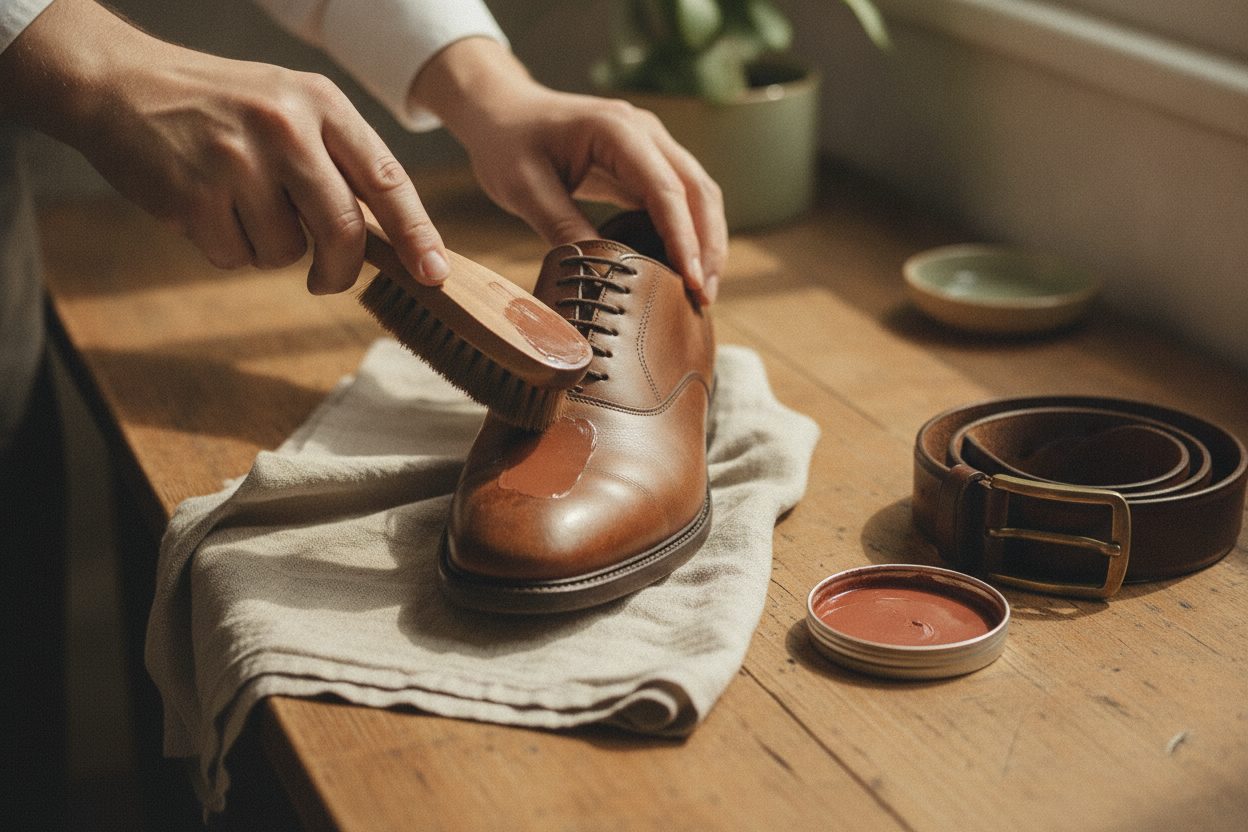
A pair of leather shoes with a stitched sole, not a glued one, can be resoled three or four times and will outlast a dozen cheap pairs. Look for a leather upper that creases softly rather than cracking, a sole with visible stitching around its edge, and a shape that holds your heel without slipping. Buy them in the afternoon, when your feet are at their largest.
Then feed them with cream twice a year, use shoe trees, and give them a day off between wears. Twenty years is not unusual.
2. A wool coat
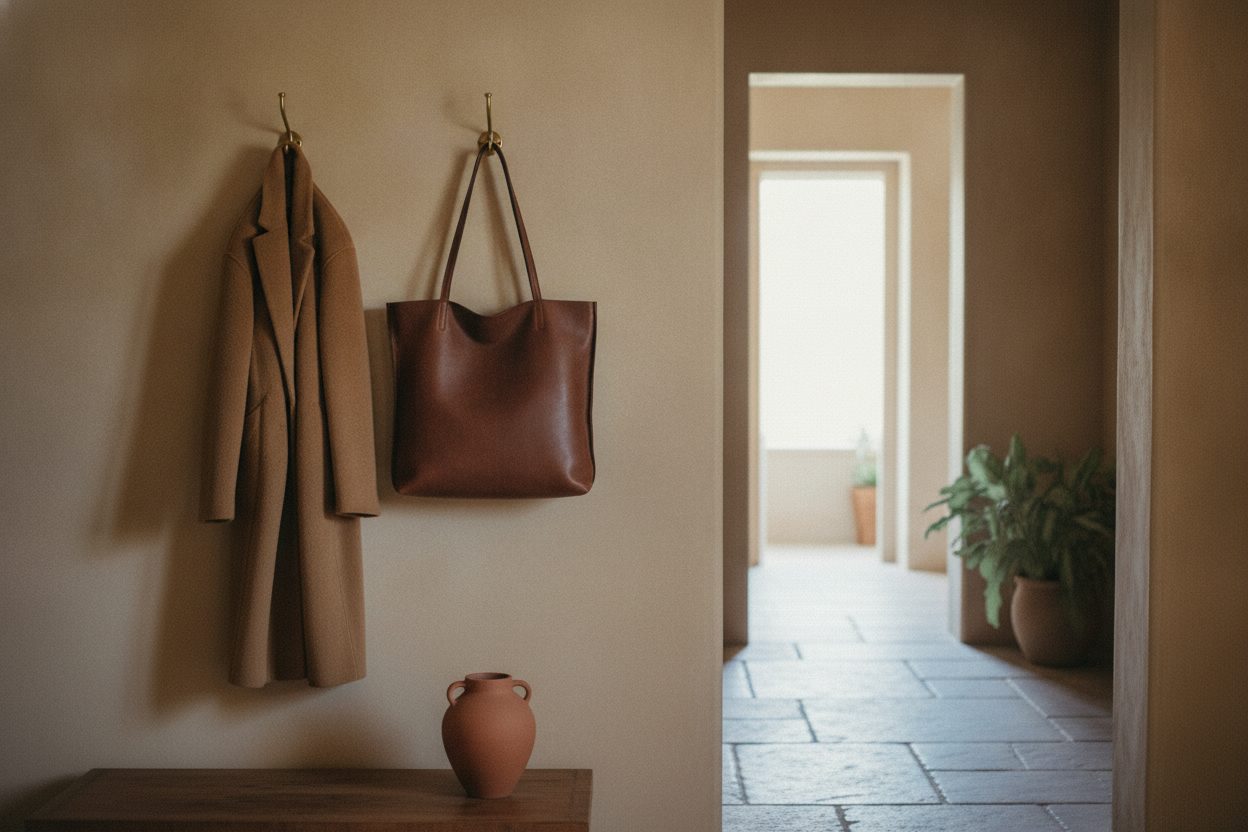
A coat is the garment most people see you in and the one you wear the most days a year. Buy it in a plain wool or wool-cashmere cloth that feels dense when you squeeze it, in one of your base colors, in a cut that closes comfortably over a thick knit. Check that the shoulder seam sits exactly on your shoulder; everything else a tailor can fix.
Lined, with real pockets, and long enough to cover what you sit on. One good coat, brushed and stored properly, serves for fifteen winters.
3. A leather bag
The bag you carry daily takes more punishment than anything else you own. Look for full-grain leather, which shows the natural surface of the hide rather than a sanded and coated one, and for solid metal fittings that feel heavy in the hand. The stitching should be even and the straps should attach to the body with reinforcement, not a single row of thread.
A plain shape in a dark color goes with everything and dates slowly. It will scuff. Good leather takes scuffs as patina; cheap leather takes them as damage.
4. Scissors
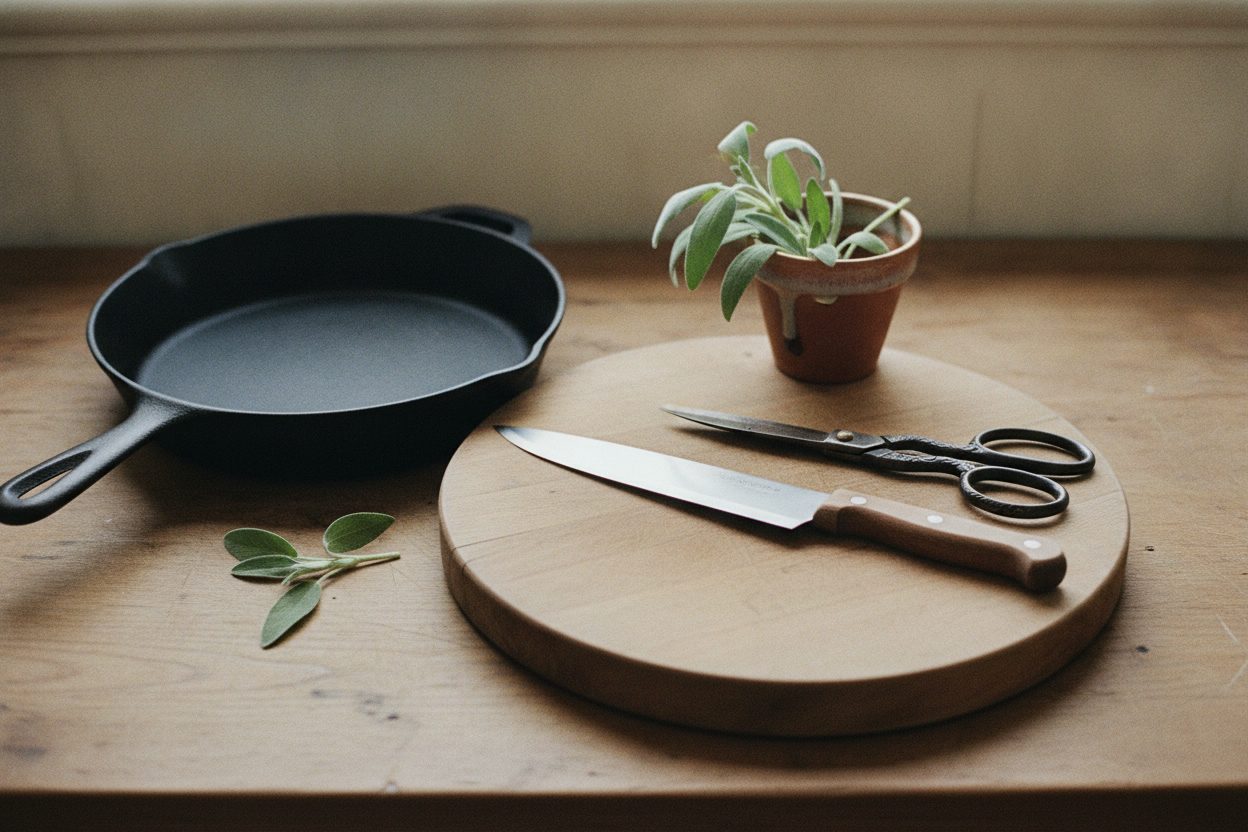
A pair of forged steel dressmaking scissors, kept for fabric and nothing else, will cut cleanly for a lifetime if nobody uses them on paper. Look for scissors forged in one piece and ground, rather than stamped from sheet, with an adjustable screw at the pivot that can be tightened as they wear. They should close with a smooth, slightly resistant feel and cut right to the tip.
Buy a cheap pair for the kitchen drawer and keep the good ones somewhere the rest of the household cannot find them.
5. A pan
One heavy pan does most of the cooking in most kitchens. Cast iron or carbon steel, with a flat base and a handle riveted rather than screwed on, will go from stovetop to oven and last for generations if it is dried after washing and wiped with a little oil.
Nonstick coatings wear out in a few years whatever the price. A properly seasoned iron pan becomes nonstick on its own, gets better with use, and can be rescued from almost any neglect with steel wool and an afternoon.
6. A kitchen knife
A single eight-inch chef's knife, kept sharp, does more than a block of twelve. Look for a blade forged from one piece of steel that runs the full length of the handle, a comfortable grip when you pinch the blade just ahead of it, and a weight that feels balanced at that point.
Then buy a simple sharpening stone and learn to use it, which takes an evening. Wash the knife by hand, dry it at once, and store it where the edge touches nothing. Sharp knives are safer than blunt ones and last for decades.
7. An umbrella
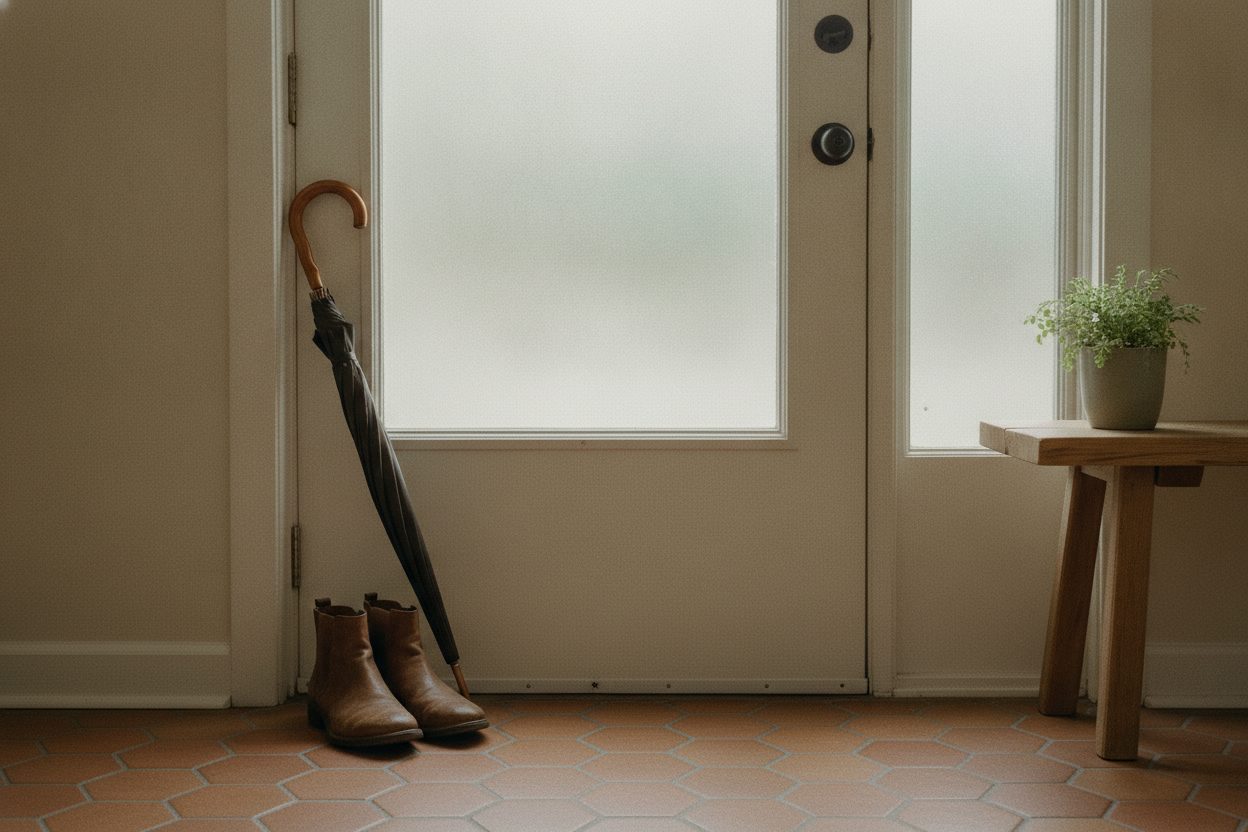
Cheap umbrellas are designed to be lost, and they oblige by breaking first. A good one has a frame of fiberglass or sprung steel with eight or more ribs, a canopy of tightly woven fabric that sheds water rather than soaking it up, and a shaft and handle of wood or solid metal that does not flex when you lean on it.
Open it in the shop and push against the canopy; it should give and return. Buy one in a color you can spot in a restaurant stand, and carry it on gray days instead of hoping.
8. A leather belt
A belt cut from a single thickness of full-grain leather, with a solid brass buckle, will outlast every trouser it holds up. Avoid belts made from thin layers glued together, which split along the edge within a year, and anything described as bonded or genuine leather, which is the lowest grade allowed to use the word.
The buckle should be removable, so it can be changed or the belt cut down. Buy it to fasten on the middle hole and wear it in, every day, until it fits you alone.
9. A wool blanket
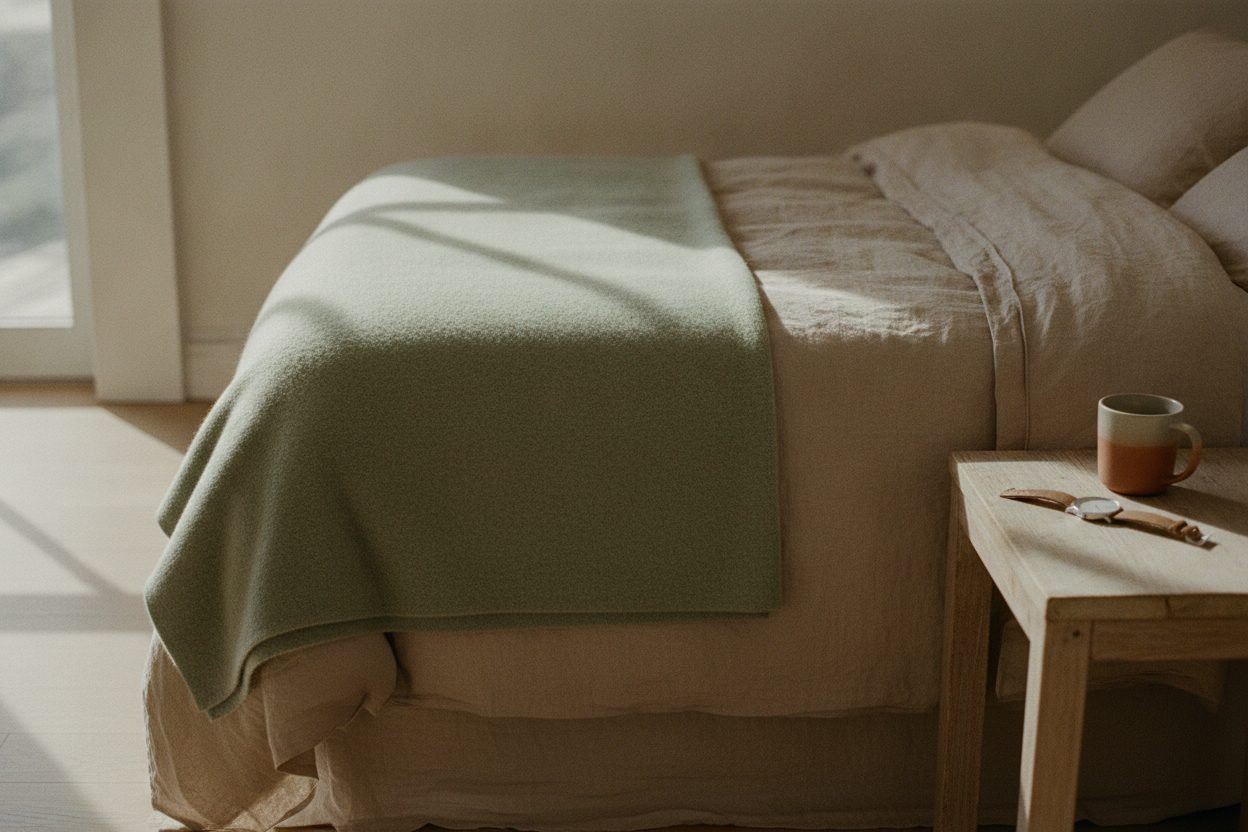
A blanket in pure new wool, woven densely enough that you cannot see light through it, will sit on the end of a bed for forty years. Wool regulates temperature, resists dirt, and is naturally slow to catch fire, which is why hotels and hospitals used it before synthetics became cheaper.
Look for a label that says one hundred percent wool, bound edges rather than fringe if you want it to last, and a weight that feels like a hand on your shoulder. Air it, wash it rarely, and keep cedar in the cupboard for the moths.
10. A watch
A simple mechanical watch, with a plain face and no features you will not use, is the clearest example of buying once. There is nothing inside it to go out of date. Look for a sapphire crystal, which will not scratch, a steel case, and a strap you can replace. Have it serviced every five to seven years, as you would a car.
Then wear it every day for the rest of your life and give it to someone. Almost nothing else you buy will be worth owning that long. That is what buying once means.