What a Home Inspector Notices in the First Minute
Before the front door opens, a good inspector has already read the ground, the gutters and the roofline. Here is what they see, and how to borrow the habit on your next viewing.
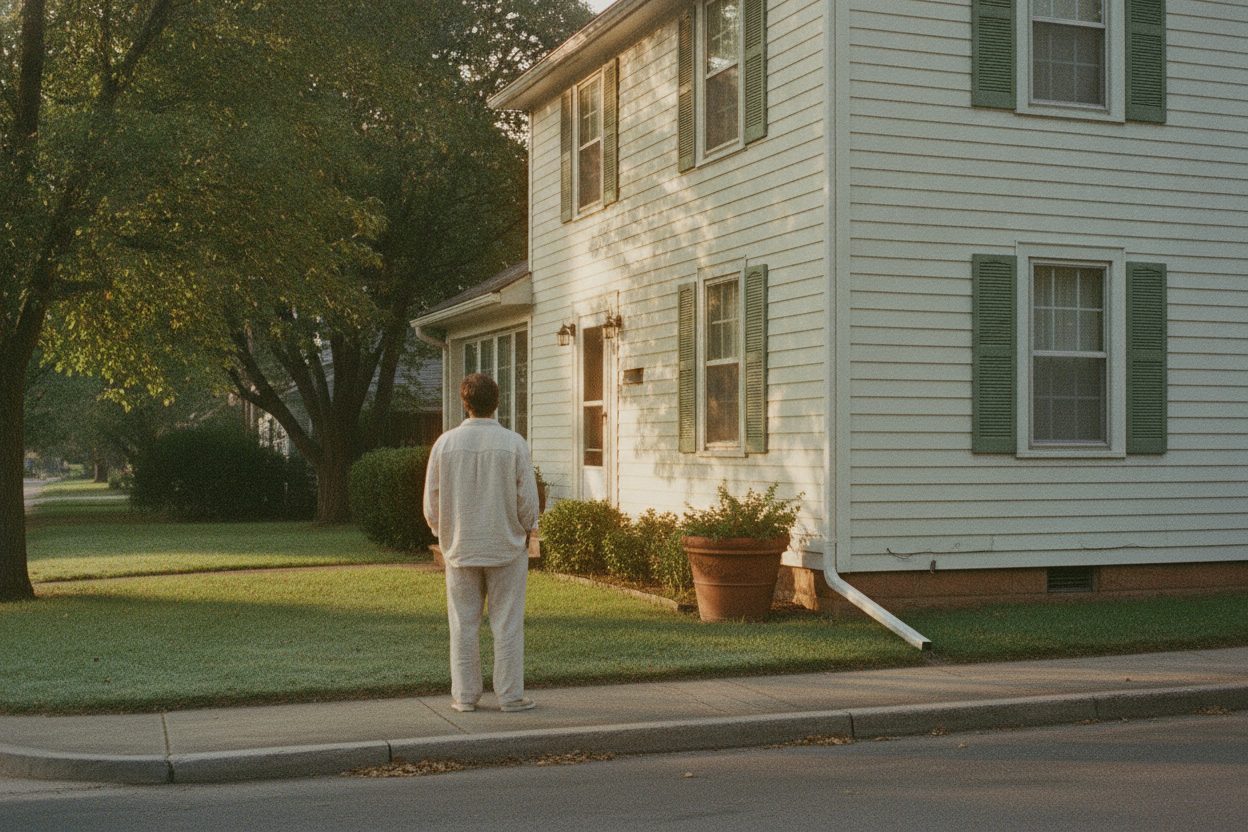
Ask a home inspector what they look at first and most of them will say the same thing. Not the kitchen. Not the furnace. The ground.
They pull up, get out of the car, and stand on the sidewalk for a moment before they touch the gate. In that pause they are reading the house the way a doctor reads a face in a waiting room. Where does the rain go. Does the roof run straight. Are the gutters doing their job. By the time the door opens, they already have a list of questions, and the inside of the house is mostly there to answer them.
You do not need a ladder or a moisture meter to copy the habit. You need about two minutes and the willingness to look at the boring parts first.
Start with where the water goes
Water is the thing that ruins houses, and it starts outside. An inspector looks at the ground around the foundation and asks one question: does it slope away from the house, or toward it. Soil that dips toward the wall sends every storm at the basement. A settled concrete path that tilts back toward the house does the same thing, slowly, for years.
Look for the tells. A green or dark stain along the bottom of the siding. Soil that is wet on one side of the house and dry on the other after a dry week. Downspouts that end in a puddle a foot from the wall instead of running off into a drain or at least a long extension. None of these is a reason to walk away. All of them are a reason to look hard at the basement later.
Read the roofline like a sentence
Stand back far enough to see the whole roof and follow the ridge with your eye. It should be a straight line. A gentle sag in the middle can mean the structure has carried too much for too long, or that something underneath has been wet and softened. A dip over one section often points to a bad repair, or a leak fixed on the surface and not below it.
Then look at the shingles themselves, from the ground. Curling edges, missing pieces, a patch where the color is newer than the rest. A line of moss along a shaded edge is normal in a damp climate; moss across the whole slope means the roof holds water. If the house has a chimney, look at where it meets the roof. That join is the single most common place for a leak to start, and it is where an inspector’s eyes go first.
The gutters tell on the owner
Gutters are the most honest part of a house, because almost nobody cleans them until something goes wrong. An inspector glances along them and reads the maintenance history in about five seconds.
Plants growing out of the gutter mean they have not been cleared in a year or more. A gutter pulling away from the fascia board means the board behind it may be soft. Rust streaks or peeling paint under a joint means it has been overflowing in that spot. And a gutter that simply stops, with no downspout, is water being poured onto the ground next to the foundation every time it rains.
Fixing gutters is cheap. What they have been doing to the house for the last ten years may not be.
Windows, seals and the fog that will not clear
Walk the outside and look at each window frame. Peeling paint along the bottom rail is a sign that water sits there. Caulk that has cracked or pulled away lets water into the wall. Wood that gives when you press a thumb against it is rot, and it rarely stops at the window.
On double-glazed units, look for fog or a milky film between the panes. That means the seal has failed and the window has lost its insulating value. It is not structural, but each one will eventually need replacing, and an inspector counts them because the total adds up fast.
The door opens, and the nose goes first
The moment the door opens, an inspector is smelling before they are looking. The first breath of a house tells you more than the first glance, because smell is hard to stage.
Damp, musty, cellar-like air means moisture, somewhere. A strong air freshener or a candle burning in every room is not proof of a problem, but it is a reason to wonder what it is covering. A sharp, sweet chemical note can be fresh paint over something, and that is a prompt to look harder at the ceilings. Cigarette smoke lives in the drywall and does not leave with the furniture.
Notice the first breath, then let your nose adjust so you catch the room that smells different from the rest. That difference is the information.
Floors, doors and the shape of the frame
Inside, the inspector is still reading structure before finishes. They walk the floors and feel for slope. They look at door frames and ask whether the gaps are even. A door that has been planed at the top corner to make it close was fighting a frame that moved. A crack in the drywall that runs at an angle from the corner of a door or window is a house that has shifted, even if it was years ago.
A floor that bounces in the middle of a room may be undersized joists or may just be an old house being an old house. The inspector does not decide on the spot. They note it and go to the basement to see what is holding it up.
Cosmetic, structural, and the stuff in between
The most useful thing an inspector does is sort what they see into piles, because almost everything looks alarming to a buyer and almost nothing is.
Cosmetic is paint, carpet, dated tile, scuffed floors, ugly fixtures, a fence that leans. These are weekend jobs or budget lines, not reasons for concern. Price them if you like, then stop worrying.
Structural is anything that affects whether the house stands up and stays dry: the foundation, the framing, the roof deck, the drainage. A horizontal crack in a basement wall. A beam that has been propped with a stack of blocks. A roofline that visibly sags. These are not automatically fatal, but they need a specialist, a price, and a conversation before you commit.
The middle pile is systems. Wiring, plumbing, heating, the water heater. These are expensive to replace, straightforward to assess, and almost always negotiable. An old furnace is a number, not a mystery.
A two-minute version you can do at any viewing
You will not get a full inspection out of a viewing, and you should not try. But you can get the first minute. Arrive a little early and stand across the street. Follow the roofline. Count the gutters and see where the downspouts end. Walk the perimeter and look at where the ground meets the wall. Look at each window frame from the outside.
Then go in, and before you look at anything, breathe. Walk every room with your eyes on the ceilings and the corners of the door frames, not the countertops. Open one closet and look at the back wall. Run a tap and watch how fast it drains.
That is it. Two minutes, no tools. You will not find everything, but you will know whether to be excited or careful before the agent has finished talking about the light.
Why the first minute matters most
Inspectors look outside first because the outside is where problems begin and where they are cheapest to fix. The inside of a house is a story the owner is telling you. The outside is the house telling you itself.
If you only learn one thing from the people who do this for a living, learn to stand on the sidewalk for a moment before you go in. The house is already talking. Most buyers walk straight past it.
Nothing here replaces a proper inspection by a licensed professional. If you are buying, book one, and go along for the walk-through so you can see what they see.