The Boring Secret to Better Sleep
No powders, no rings, no cold plunge. The dull routine that fixes most bad sleep, why it takes a month to work, and the one sign it is time to stop fixing it yourself.
Every few months a new way to sleep arrives. Tape for your mouth. A ring for your finger. A powder that tastes of cherries and promises deep sleep by Thursday. Some of these help some people a little. None of them is the thing that works.
The thing that works is boring. It was boring before the gadgets arrived and it will be boring after they are gone. It asks you to do the same unremarkable things at the same unremarkable times, and to keep doing them after the novelty has worn off, which is usually around day four.
Here it is, in the order that matters.
Get up at the same time, even on Sunday
Most sleep advice starts at bedtime. Start at the other end. Your body does not really have a bedtime. It has a wake time, and everything else is set from that. If you get up at seven on Tuesday and ten on Saturday, you have asked your body to live in two time zones, and it will behave accordingly.
Pick a time you can keep seven days a week. Not the time you would like to wake, but the time you can actually manage after a late dinner on a Friday. Then hold it. Within two or three weeks you will notice that you start to feel sleepy at roughly the same point each evening without trying. That is the whole trick. Once the wake time stops moving, the bedtime arranges itself.
The weekend is the hard part. Sleeping in feels like a reward and works like a short-haul flight. If you have had a late night, get up at the usual time anyway, be tired, and go to bed early that evening. One tired Saturday is cheaper than a week of Mondays.
Then go outside
This is the second half of the same instruction. Within an hour of waking, get daylight on your face. Not through a window. Outside, with your eyes open. Ten minutes is good, and longer is better on a gray day, when the light is weaker than it looks.
Make the coffee and drink it on the step. Walk to the corner and back. Take the trash out slowly. Morning light is how your body learns that the day has started, and it quietly sets a timer for the evening. People who do this consistently tend to find that sleep comes more easily about sixteen hours later. A sunrise lamp can help on dark winter mornings, but it is a stand-in, not a substitute.
Stop borrowing from the night
Caffeine stays in the system far longer than it feels like it does. If you are not sleeping well, move the last coffee of the day back to lunchtime for two weeks and see what happens. Most people are surprised. The same goes for the long afternoon nap. Twenty minutes before three o’clock is restorative. An hour at five is tonight’s problem arriving early.
Alcohol is the other loan. A glass of wine gets you to sleep faster and wakes you at three, hot and thirsty. It is not a sleep aid. It is a sedative with a repayment schedule.
The hour before bed is for nothing useful
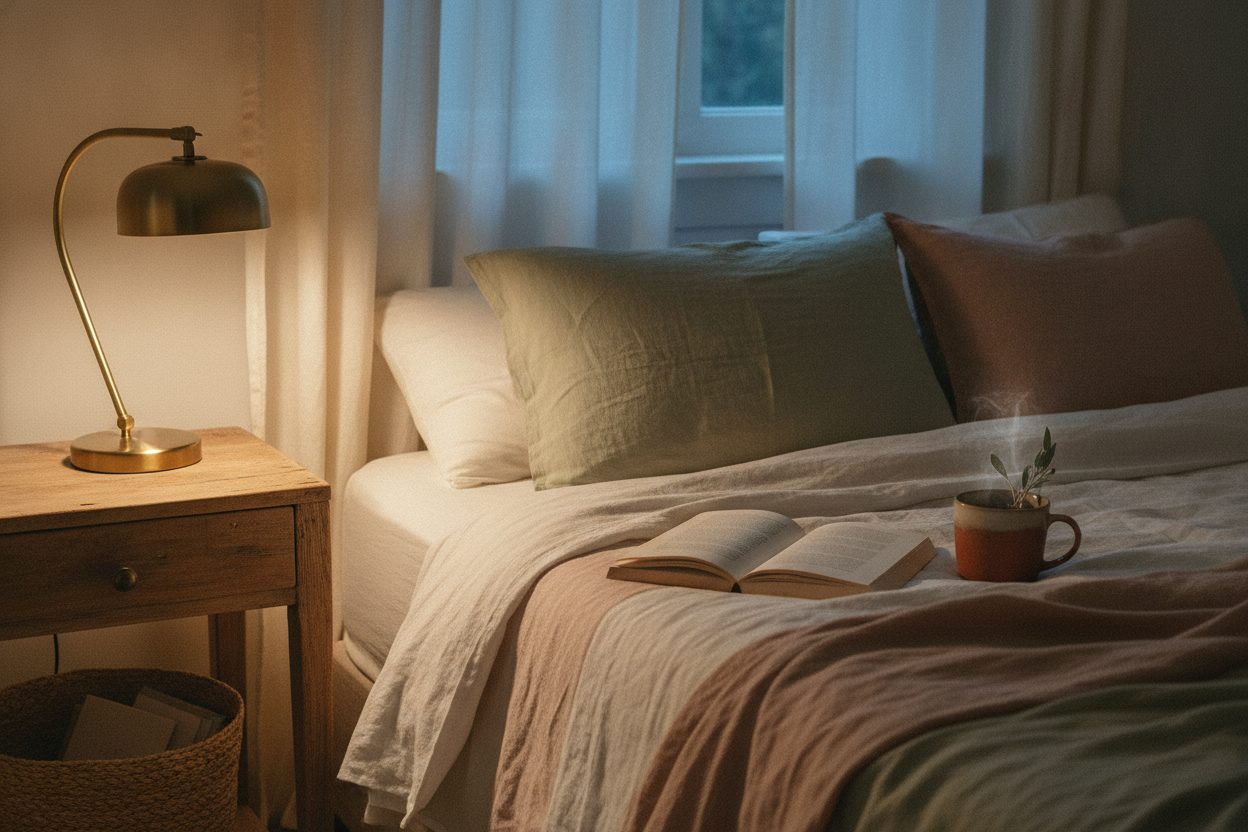
Decide what time you want the light off, then protect the hour before it. Dim the lamps. Put the screens somewhere else, or at least stop doing anything on them that asks for a decision. Have a warm shower or bath. Read something that does not matter. Do the same small things in the same order every night.
The point is not relaxation, although that helps. The point is the signal. A routine that does not vary tells your body what is coming, the way a dog knows the sound of the leash. After a few weeks the first step of the routine starts to make you yawn, and that is when you know it has taken.
Make the bedroom do one job
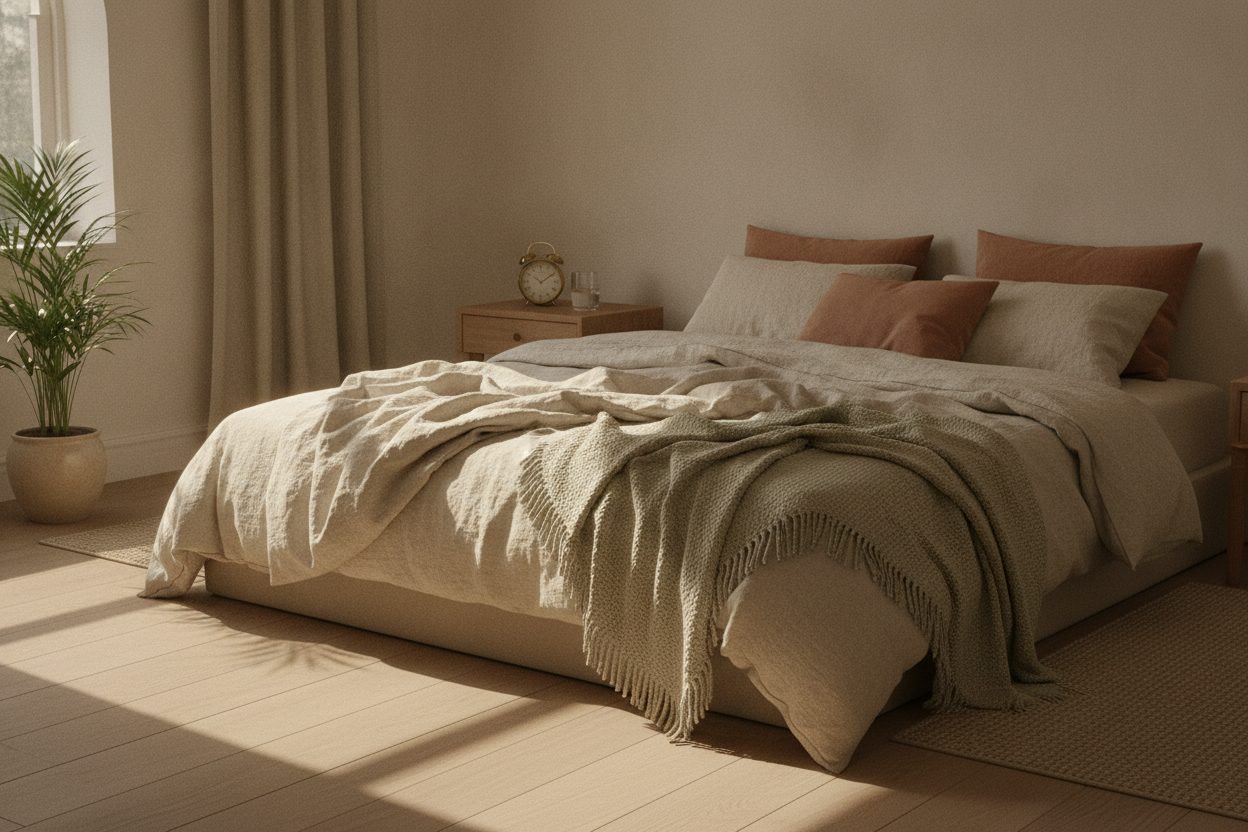
Dark, cool, quiet. Curtains that actually block the streetlight. A room a little colder than you think you want. The phone charging in the kitchen, and a cheap alarm clock in its place.
Then let the bed mean sleep. If you work in it, scroll in it, eat in it and argue in it, your body stops knowing what the bed is for. Keep it for sleeping and for the other thing, and do everything else somewhere with a back to the chair.
What to do at 3 a.m.
Everybody wakes in the night. The problem is rarely the waking. It is what happens next.
Do not look at the clock. The number does not help, and the arithmetic that follows it is poison. If you have been awake long enough to feel irritated, roughly twenty minutes, get up. Go to another room, keep the lights low, and do something dull. Fold laundry. Read the boring book. Go back to bed when you feel sleepy, not when you think you ought to.
This feels wrong the first few times. It works because it stops the bed from becoming the place where you lie awake and worry about lying awake. Leave the phone where it is. Nothing on it at three in the morning will make tomorrow better.
Give it a month, not a weekend
None of this works in three days, and that is where most people give up. Hacks promise fast results because fast results are what sells. Habits take a few weeks to settle, and the first week often feels worse, because you are tired and not yet sleeping better.
Keep a scrap of paper by the bed. Write down the time you got up and a word for how you slept. Nothing more. By the end of the month you will have a pattern you can see, and it will almost certainly show you which of the boring things you skipped on the bad nights.
When to stop fixing it yourself
The routine fixes most ordinary bad sleep. It does not fix everything, and there are signs that mean it is time to talk to someone rather than try harder.
Loud snoring, or a partner who says you stop breathing or gasp in the night. Legs that will not keep still once you lie down. Falling asleep during the day when you do not mean to, especially at the wheel. Trouble sleeping that has lasted more than three months despite doing the boring things properly. Low mood or anxiety that arrived with the bad sleep and has not left.
Start with your doctor. If the problem is insomnia, ask about cognitive behavioral therapy for insomnia, which is the first treatment most guidelines recommend before any pill. If it sounds like sleep apnea, ask for a referral to a sleep clinic. These are ordinary conversations, and they are shorter than another year of lying awake.
The boring part is the point
There is a reason none of this is on a billboard. You cannot sell a wake time. You cannot put morning light in a jar. The routine is free, and it is dull, and it asks for nothing more than the willingness to do the same things again tomorrow.
That is the secret, such as it is. Not a trick, but a rhythm. Keep it for a month and you will stop thinking about sleep altogether, which is the surest sign that it has started working.
General information, not medical advice. If poor sleep is affecting your days, or you notice any of the signs above, talk to a doctor.