What Happens When You Stop Buying Lunch for a Year
A year without the bought sandwich, told honestly. The money turned out to be the least interesting part, and the first two weeks were the hardest.
Buying lunch is the most defended small expense there is. It is not a vice. It is barely a pleasure. It is just what happens at half past twelve when you have been in meetings since nine and the sandwich shop is downstairs.
So we wanted to know what actually changes when you stop. Not for a week, which proves nothing, but for a year. What follows is a composite: a few readers who did a version of this, plus our own attempt, folded into one account. The money figures are an illustration, rounded for clarity, and not anyone’s receipts.
The setup
The rule was simple and had one escape hatch. Bring lunch every working day for twelve months. Lunch with a friend or a colleague, sitting down, counted as a meal out and was allowed. Grabbing a wrap to eat at the desk did not.
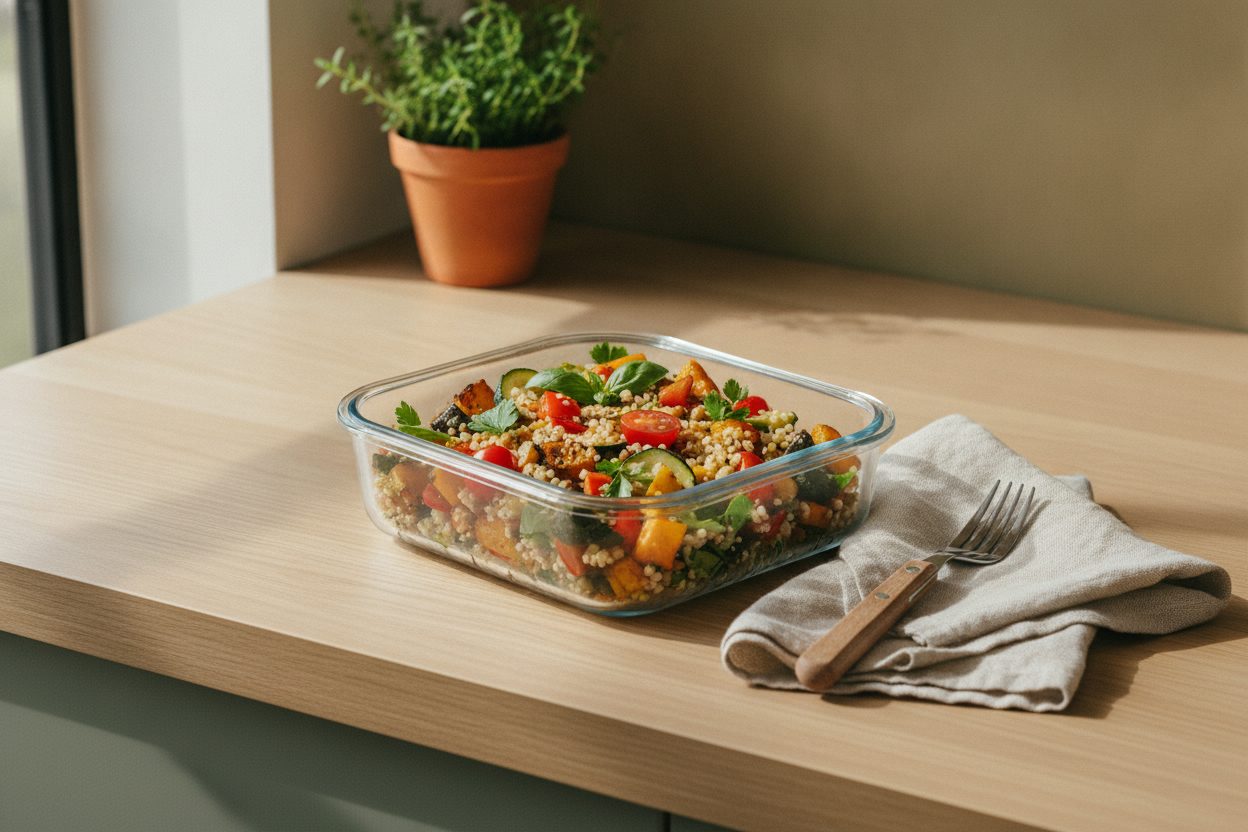
Three things made it possible before day one. A set of containers that seal properly, because a leaking bag ends the experiment in week one. A shelf in the fridge that was only for lunch. And a decision, written down, about what to do on the mornings it all went wrong: a tin of beans, a bag of rice and a jar of something, kept permanently in a desk drawer at work.
Nobody planned menus. That felt like the kind of system that collapses the first time life gets busy.
The first two weeks
They were worse than expected, and not because of hunger.
The mornings were the problem. Ten extra minutes before leaving the house turns out to be a lot of minutes when you did not have them. The first week involved two lunches forgotten on the counter and one eaten at eleven because the morning had been long and it was there.
By the second week the lunch had moved to the night before. Cooking a little more at dinner and putting a portion straight into a container while plating up became the whole method. The ten minutes in the morning disappeared because there was nothing left to do.
The craving for the bought thing lasted about nine days. It was not about the food. It was about the walk, the queue, the small decision, the eight minutes outside. More on that later.
The money, as an example
Take a bought lunch at around twelve dollars once you count the drink. Across roughly two hundred and thirty working days, that is a little under three thousand dollars a year.
A lunch made from the previous night’s dinner is not free. Call it an extra three dollars in ingredients, or about seven hundred over the year. The difference is in the region of two thousand two hundred dollars.
These are round numbers, chosen to be easy to follow. Yours will be different, and probably lower if you were already bringing lunch some days. Whether the number is significant depends entirely on what it does next. Left in the current account, it evaporates into everything else by the following month. Moved into a separate savings account each payday, it becomes something you can point to in December.
The readers who felt the experiment worked were the ones who moved the money. The ones who did not mostly could not tell you where it went, which is its own kind of finding.
The time, which went the wrong way at first
Expect to lose time before you gain it. For the first month the experiment cost about an hour a week in extra cooking and washing up.
Then it reversed. The lunch hour itself got longer. Without the walk to the shop and the queue, the actual eating took fifteen minutes, which left most of an hour that had not existed before. Some of it went on a real walk, the kind without a destination. Some of it went on leaving work twenty minutes earlier because the day had less dead time in it.
By spring the balance was positive. Nobody could put a number on it, and we are not going to invent one. It felt like an extra half-day a month.
The afternoons
This was the part nobody predicted. The bought lunch was usually bread, something salty and a sweet drink, eaten fast. The packed one was whatever dinner had been: a grain, a vegetable, some protein, eaten slowly because there was time.
The three o’clock slump softened. It did not vanish, and we would not claim it did, but the afternoons became more even. Several readers mentioned this before they mentioned the money. One put it simply: she stopped needing the four o’clock biscuit.
Dinner changed as well. Cooking one extra portion every night nudged the evening meal toward things that reheat well, which tend to be the simpler, cheaper, more vegetable-heavy things anyway.
The social part
Lunch is where a lot of quiet workplace life happens. Walking to the shop with a colleague is half the week’s conversation for some people. Giving it up outright would have been a loss, which is why the rule had the escape hatch.
What happened in practice was a shift. The walk still happened, with the packed lunch eaten on a bench at the end of it instead of at a counter. Sitting-down lunches with friends became a proper event, roughly twice a month, rather than a reflex. They were better for it, and the cost felt like a choice rather than a leak.
The awkward moments were real but brief. There were a couple of weeks of “you’re not getting anything?” and then it was simply a thing you did.
What stuck
A year on, the experiment is over and most of it is still happening. Lunch gets packed four days out of five. The fifth is usually a sitting-down meal with someone. The containers are still in use and the emergency drawer at work still has rice in it.
What did not stick was the strictness. Nobody feels guilty about a bought sandwich anymore. It just stopped being the default, and a default is a powerful thing to change.
If you try it, the advice from everyone who did is the same. Make it the night before, not the morning. Keep an emergency lunch at work. Allow the proper meals out. And move the money somewhere you can see it, or the whole year will feel like it was about nothing.
This is general information, not financial advice. Your costs and savings will depend on where you live and how you eat.